

Sodium Hypochlorite Solution Analog ORP Sensor with ±1000mV Range and 0-80℃ Temperature Operation
Professional analog ORP sensor designed for sodium hypochlorite solution monitoring. Features platinum membrane, glass housing, and 0-0.6MPa pressure resistance. Customizable cable lengths up to 5m with multiple connector options. Provides reliable oxidation-reduction potential measurements for industrial water quality control applications.
Place of Origin
Nanjing, China
Connection Thread
PG13.5
Packaging Details
Neutral carton
Pressure Resistance
0-0.6MPa
Model Number
AG2505C
Supply Ability
100 Unit/Week
Product Description
Technical Specifications
| Parameter | Specification |
|---|---|
| ORP Range | ±1000mV |
| Temperature Range | 0-80℃ |
| Pressure Resistance | 0-0.6MPa |
| Temperature Sensor | OEM |
| Housing Material | Glass |
| Sensitive Membrane | Platinum (Pt) |
| Connection Thread | PG13.5 |
| Cable Length | 5m or custom |
| Cable Connector | Pin, BNC, or custom |
Product Overview
This sodium hypochlorite solution analog ORP sensor operates on potentiometric analysis principles using galvanic cell technology. The sensor converts chemical reaction energy into measurable electrical energy through electromotive force (EMF), providing accurate oxidation-reduction potential measurements for water quality monitoring.
ORP serves as a comprehensive indicator of water quality by integrating multiple parameters into a single measurement value. It reflects the collective redox behavior of all substances in solution, with positive potentials indicating oxidizing properties and negative potentials showing reducing characteristics.
Installation Methods
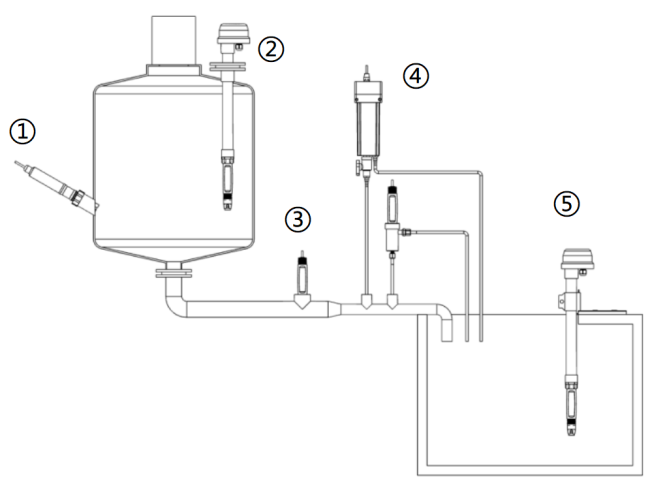
- Sidewall Installation: Ensure interface tilt angle exceeds 15 degrees
- Top Flange Installation: Note flange dimensions and electrode insertion depth
- Pipe Installation: Consider pipe diameter, flow velocity, and pressure requirements
- Flow-Through Installation: Monitor flow velocity and pressure conditions
- Submersion Installation: Adjust bracket length according to application needs
Maintenance Guidelines
- Unscrew protective cap and immerse electrode bulb and liquid junction in sample before use
- Rinse with water if salt crystals form near electrode tip due to electrolyte evaporation
- Check for air bubbles in glass bulb by shaking electrode vertically
- Keep glass membrane hydrated for optimal response time
- Clean terminals with anhydrous alcohol if contaminated
- Avoid prolonged immersion in distilled water, protein solutions, or contact with silicone grease
- For aged electrodes with cloudy membranes, soak in 10% HCl solution then rinse thoroughly
Performance & Lifespan
Expected Lifespan: Over 12 months with proper maintenance
Properly stored electrodes maintain functionality for 12-24 months. Exposure to strong acids, bases, high temperatures, or corrosive liquids may reduce operational lifespan. Electrodes are considered consumable components and typically not covered by warranty.
Calibration Procedure
- Use fresh pH/ORP standard buffer solutions of appropriate concentrations
- Remove protective cap and rinse electrode with distilled water
- Set instrument to calibration mode according to manufacturer instructions
- After calibration completion, proceed with actual sample measurements
Recommended Products

Interested in this product?
Contact us now for more details and a custom quote.