

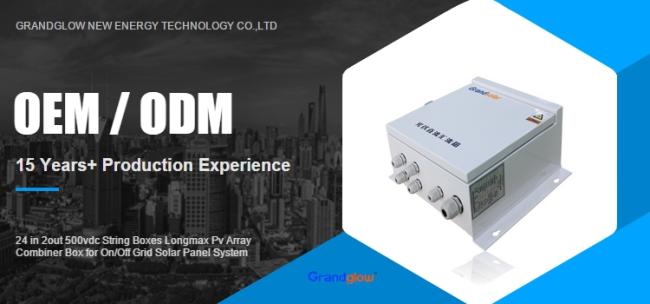
24 in 2out 500vdc String Boxes Longmax Pv Array Combiner Box for On/Off Grid Solar Panel System
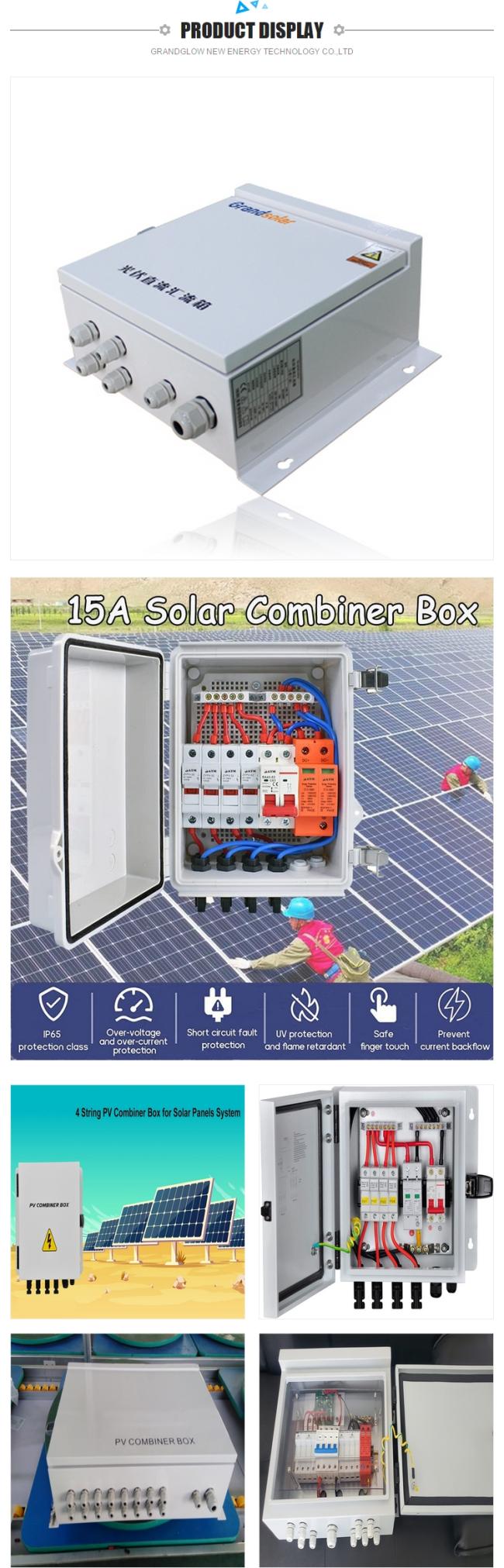
OPTION:-Fuses (shipped uninstalled)-Surge protection-Solar cable whips (pre-assembled and installed) - see page 8-Compression output lugs-Factory installed breather vent or drain-Bipolar construction (to 1000 VDC combined voltage)-Smart combiners available (DC string monitoring)-Factory drilled entrance holes-Factory installed conduit fittings/cable glands-Dual output lugs-Lockable enclosures-Integral power supply-Terminal blocks-Factory installed strut-Custom options

-Fuses (shipped uninstalled)
-Surge protection
-Solar cable whips (pre-assembled and installed) - see page 8
-Compression output lugs
-Factory installed breather vent or drain
-Bipolar construction (to 1000 VDC combined voltage)
-Smart combiners available (DC string monitoring)
-Factory drilled entrance holes
-Factory installed conduit fittings/cable glands
-Dual output lugs
-Lockable enclosures
-Integral power supply
-Terminal blocks
-Factory installed strut
-Custom options available - consult factory

| Model Number | 1 in and 1 out |
| Brand Name | Grand glow |
| Place of Origin | China |
| China | Hubei |
| Warranty | Other |
| voltage level | 1000VDC-15000VDC |
| Diode parameters | 55A 1600VDC |
| SPD | UC:1000VDC |
| Branch current | 15A |
| Protection Degree | P65 |
| Operating temperature range | -15-60C |
| Ambient humidity | 0-99% |
| Altitude | <2000m |
| Intelligent monitor | support (optional function) |


| Part Number | Description |
| 1 | Negative convergence copper busbar |
| 2 | 16-way detection unit |
| 3 | DC MCB |
| 4 | DC positive convergence output |
| 5 | Dc negative Convergence output |
| 6 | RS485 communication terminal (output point) |
| 7 | Ground output point |
| 8 | Lightning protection device |
| 9 | Positive convergence copper |
| 10 | DC positive fuse holder and fuse (each input with a fuse) up to 36 ways |
| 11 | DC negative fuse holder and fuse (each input with a fuse) up to 36 ways |


Maximum short-circuit current per string
Input and Output
Fuse holder Polarity
String termination at SCB
Monitoring features
One may customize the combiner boxes to your needs or the installation requirements of the location where they will be used thanks to the available configuration choices. For instance, it is extremely practicable to implement the need for arc fault detection as well as the capability for quick shutdown or a "fireman's switch" for remote system disengagement. Those that choose bifacial PV modules will find DC combiners to be especially helpful: They give the user the option to apply the proper fuses of at least 25 amps to offset the increased currents.
The combiner boxes allow you to store anywhere between two and six-string inverters in a single cabinet. They work in the harshest climate conditions and meet the highest market standards according to IEC 61439-2 ed 3.0:2020. They can resist ambient temperatures of -20 to +50 °C.
For the solar PV AC side, there are specialized 230V-400V, 690V, and up to 800VAC combiner box solutions. The power transformation and distribution between various power sources have an AC distribution box. The solution consists of AC surge protection, an AC MCCB, or an optional NH00 fuse disconnect switch.
This is due to the fact that the arcing and arc extinguishing methods used by AC and DC circuit breakers are different, therefore even breakers with the same rating cannot both turn on and off the DC power supply.
While the DC switch does not have a zero-crossing point, the ability to extinguish the arc is very weak, necessitating the insertion of a second arc extinguishing device, AC has a zero-crossing point at every cycle, making it easy to extinguish the arc at the crossing point. In essence, extinguishing an arc in DC is challenging, whereas extinguishing an arc in AC is simple with an overshoot of zero.
Circuit breakers for AC and DC systems are not interchangeable. The variations are as follows:
The two main contacts for DC and three for AC are different numbers.
The primary contact of DC and AC electrical appliances have different arc extinguishing device structures; the DC contact arc extinguishing structure is primarily of the magnetic blowing type, whereas the AC contact arc extinguishing structure is primarily of the grid type.
While a DC open of the same grade can typically be utilized momentarily for an AC occasion, an AC open shouldn't be used carelessly for a DC occasion since a short circuit is more likely to result in more intense sparks. We can therefore use a DC circuit breaker to temporarily cover the gap when we don't have an AC circuit breaker available, but we can't constantly use it because the DC kairos ability requires high.
Three alterations must be taken into consideration when adapting AC circuit breakers to safeguard DC circuits.


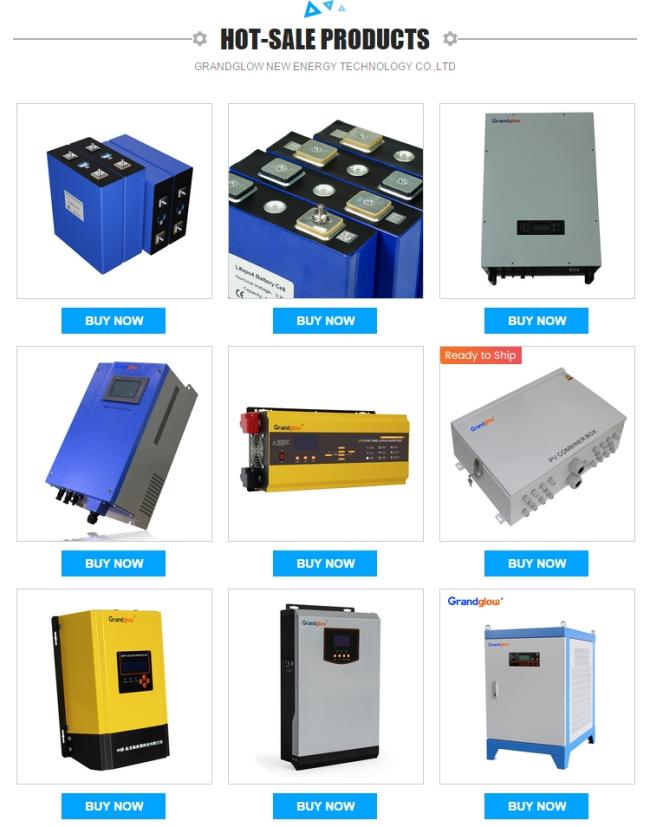
Recommended Products
