

Inner Wire Core Selection Guide for Mechanical Control Cables 1x7 7x19
Select the optimal inner wire core for your control cable application. Compare 1x7, 1x19, 7x7, and 7x19 strand configurations based on flexibility, push performance, and bend radius. Ideal for OEMs and engineers requiring durable, high-performance cable solutions.
How to Select the Right Inner Wire Core for Mechanical Control Cables
Choosing the correct strand configuration for your inner wire core is critical for ensuring optimal cable performance, durability, and user experience. At Phidix, we help engineers, designers, and OEMs align cable core structures with specific mechanical, spatial, and environmental demands.
This guide will walk you through the pros, cons, and ideal uses for each major construction type.
Strand Configuration Comparison Table
| Construction | Flexibility | Push Performance | Bend Radius | Application Suitability |
| 1x7 | Low | Excellent | Large | Long straight runs, rigid cable routing |
| 1x19 | Medium | Very Good | Medium | Precision push-pull actuation |
| 7x7 | High | Medium | Tight | Versatile routing, good tensile/flex combo |
| 7x19 | Very High | Lower | Very Tight | High-flex routing, complex motion paths |
| Solid Core | None | Best | Rigid only | Short travel, direct motion transfer |
Factors to Consider When Selecting Core Type
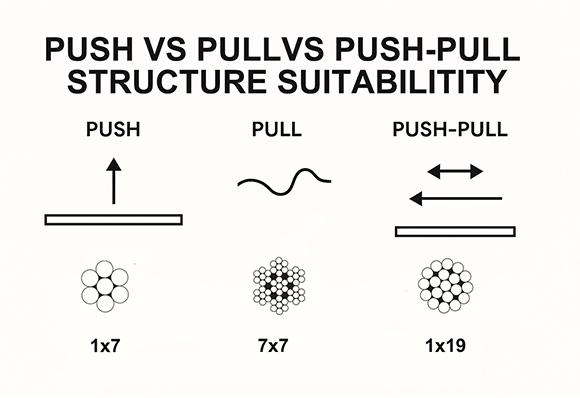
Application Scenarios & Structure Fit
| Application | Recommended Core Type(s) |
| Motorcycle Throttle Cable | 1x19 / 7x7 |
| Marine Control Levers | 7x7 / 7x19 |
| Industrial Damper Actuators | Solid / 1x7 |
| Commercial Recliner Seat Release | 7x19 |
| Small Engine Choke Cables | 1x7 / 1x19 |
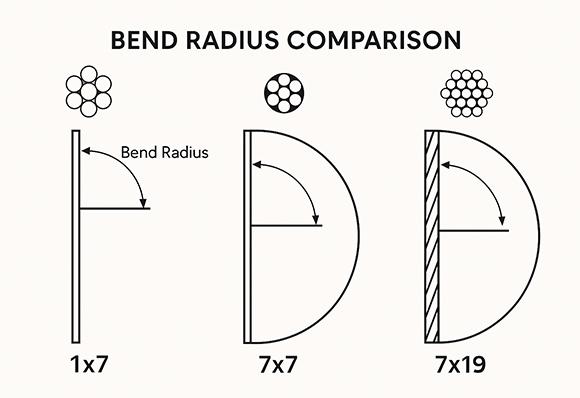
Related Pages
Ask Our Experts
Still unsure which core structure is best for your use case? Share your system details with our engineers and we’ll provide a structure-matched recommendation—along with samples and drawings if needed.
Recommended Products
